A light bulb light in a car can refer to several different things. It may mean an interior light bulb, dashboard warning light, headlight bulb, brake light, dome light, or another automotive lighting component.
Car lights are essential for visibility, safety, communication with other drivers, and information about the vehicle’s condition. When a car light bulb stops working, flickers, stays on, or appears on the dashboard, understanding what it means can help you find the right solution.
In this complete guide, we’ll explain the different types of light bulbs in cars, what dashboard lights mean, why car lights stop working, how to replace a car bulb, and how to troubleshoot common automotive lighting problems.
What Is a Light Bulb Light in a Car?
The phrase light bulb light in car can describe different lighting systems installed throughout a vehicle.
Depending on where the light is located, it may serve a different purpose.
Common automotive lights include:
- Headlights
- High beams
- Low beams
- Daytime running lights
- Fog lights
- Brake lights
- Tail lights
- Turn signals
- Reverse lights
- License plate lights
- Interior lights
- Dome lights
- Map lights
- Trunk lights
- Dashboard indicator lights
Some lights illuminate the road, while others communicate information to the driver or other road users.
Types of Light Bulbs in a Car
Modern vehicles can use several different lighting technologies.
Halogen Bulbs
Halogen bulbs have traditionally been common in headlights and other automotive applications.
They use a tungsten filament and halogen gas to produce light.
Advantages include:
- Relatively low initial cost
- Easy availability
- Familiar technology
- Simple replacement in many vehicles
However, halogen bulbs generally consume more energy and have shorter lifespans than many modern LED alternatives.
LED Car Lights
LED car bulbs use light-emitting diodes.
They are increasingly common in:
- Headlights
- Tail lights
- Brake lights
- Interior lighting
- Turn signals
- Daytime running lights
LEDs generally use less electricity and can have a longer service life than traditional incandescent or halogen bulbs.
HID/Xenon Lights
Some vehicles use HID (High-Intensity Discharge) headlights.
These systems produce light using an electrical arc rather than a traditional filament.
HID systems operate differently from standard halogen bulbs and may require specialized components.
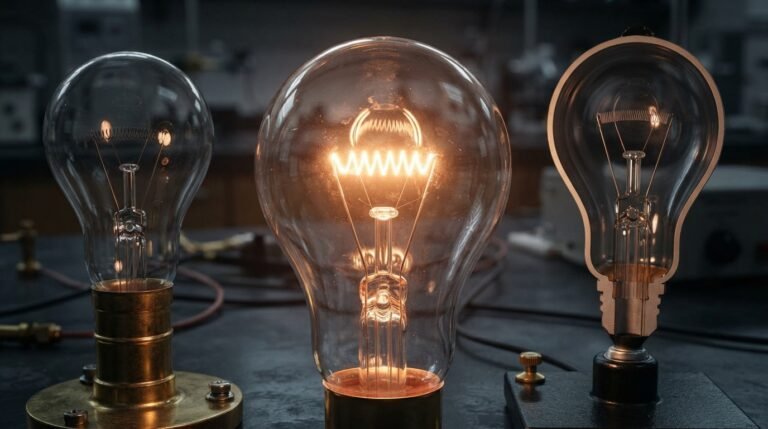
Incandescent Automotive Bulbs
Traditional incandescent bulbs are still found in some older vehicles and applications.
They use a filament that becomes hot and produces visible light.
What Does the Light Bulb Warning Light Mean in a Car?
Some vehicles have a light bulb warning light or exterior-lighting warning indicator on the dashboard.
This warning can indicate that one or more exterior lights may not be operating correctly.
Depending on the vehicle, the system may detect:
- Failed headlight
- Failed tail light
- Brake light problem
- Turn signal bulb failure
- License plate light failure
- Other exterior lighting faults
The exact symbol and meaning vary by manufacturer.
If the warning appears, inspect the vehicle’s exterior lights and consult the owner’s manual for the specific warning indicator.
What Does a Bulb Warning Light Look Like?
A bulb warning indicator commonly resembles a light bulb or lamp symbol, sometimes accompanied by an exclamation mark.
However, dashboard symbols differ between vehicle manufacturers.
Never rely solely on the appearance of a symbol if you’re unsure.
The owner’s manual provides the authoritative explanation for your particular vehicle.
Why Is the Light Bulb Warning Light On?
A bulb warning light can appear because the vehicle detects an electrical or lighting problem.
Possible causes include:
Burned-Out Bulb
The most common cause is a failed exterior bulb.
LED Failure
Some vehicles use integrated LED lighting assemblies. A fault may involve an LED module or control component rather than a replaceable bulb.
Loose Connection
A loose connector can interrupt electrical power to the light.
Corroded Socket
Moisture and corrosion can interfere with electrical contact.
Wiring Problem
Damaged wiring can prevent a bulb from receiving power.
Incorrect Replacement Bulb
Installing a bulb with the wrong specifications can cause problems.
CAN Bus Compatibility
Modern vehicles may monitor bulb current electronically.
Installing an incompatible LED replacement can sometimes cause a warning or rapid flashing.
Why Is My Car Light Bulb Flickering?
A flickering car light can have several causes.
Common possibilities include:
- Loose bulb
- Poor socket connection
- Damaged wiring
- Failing LED module
- Weak electrical connection
- Alternator or voltage issue
- Incompatible aftermarket LED bulb
- Faulty control module
If multiple vehicle lights flicker simultaneously, the problem may be electrical rather than a single defective bulb.
Why Is My Car Light Not Working?
If a car light isn’t working, check the simplest possibilities first.
Step 1: Inspect the Bulb
Look for a broken filament, darkened glass, or other obvious damage.
Step 2: Check the Fuse
A blown fuse can interrupt power to a lighting circuit.
Step 3: Inspect the Socket
Look for corrosion, dirt, moisture, or damaged contacts.
Step 4: Check the Connector
Make sure electrical connectors are properly seated.
Step 5: Check the Wiring
Damaged or disconnected wiring can prevent the light from operating.
Step 6: Consider the Switch or Control Module
If the bulb and wiring appear fine, the problem could involve a switch, relay, body-control module, or another electrical component.
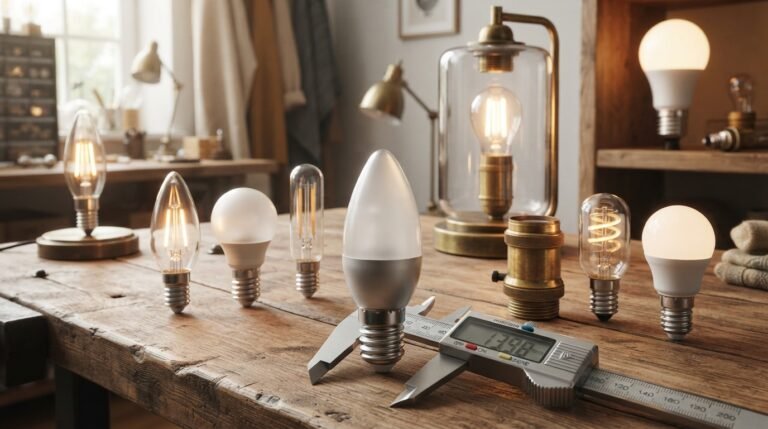
What Does a Car Light Bulb Look Like?
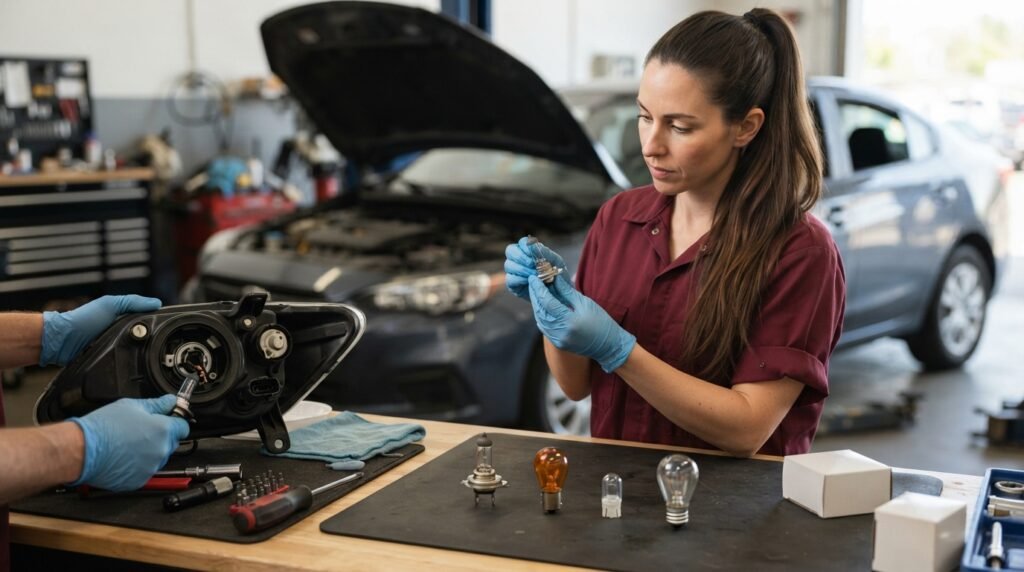
Car bulbs come in many shapes and sizes.
Common designs include:
- Small wedge bulbs
- Festoon bulbs
- Halogen reflector bulbs
- Capsule bulbs
- LED replacement bulbs
- Headlight bulbs with specific bases
The correct bulb depends on the vehicle and application.
The bulb number printed on the existing bulb or listed in the owner’s manual is often the easiest way to identify a replacement.
How to Find the Right Car Light Bulb
Before buying a replacement, determine the correct bulb specification.
Check:
- Vehicle make
- Vehicle model
- Model year
- Lighting position
- Existing bulb number
- Voltage
- Wattage
- Base type
- Bulb technology
- Manufacturer compatibility requirements
For example, a vehicle may use a different bulb for the low beam than for the high beam.
Never assume all bulbs in the same car are interchangeable.
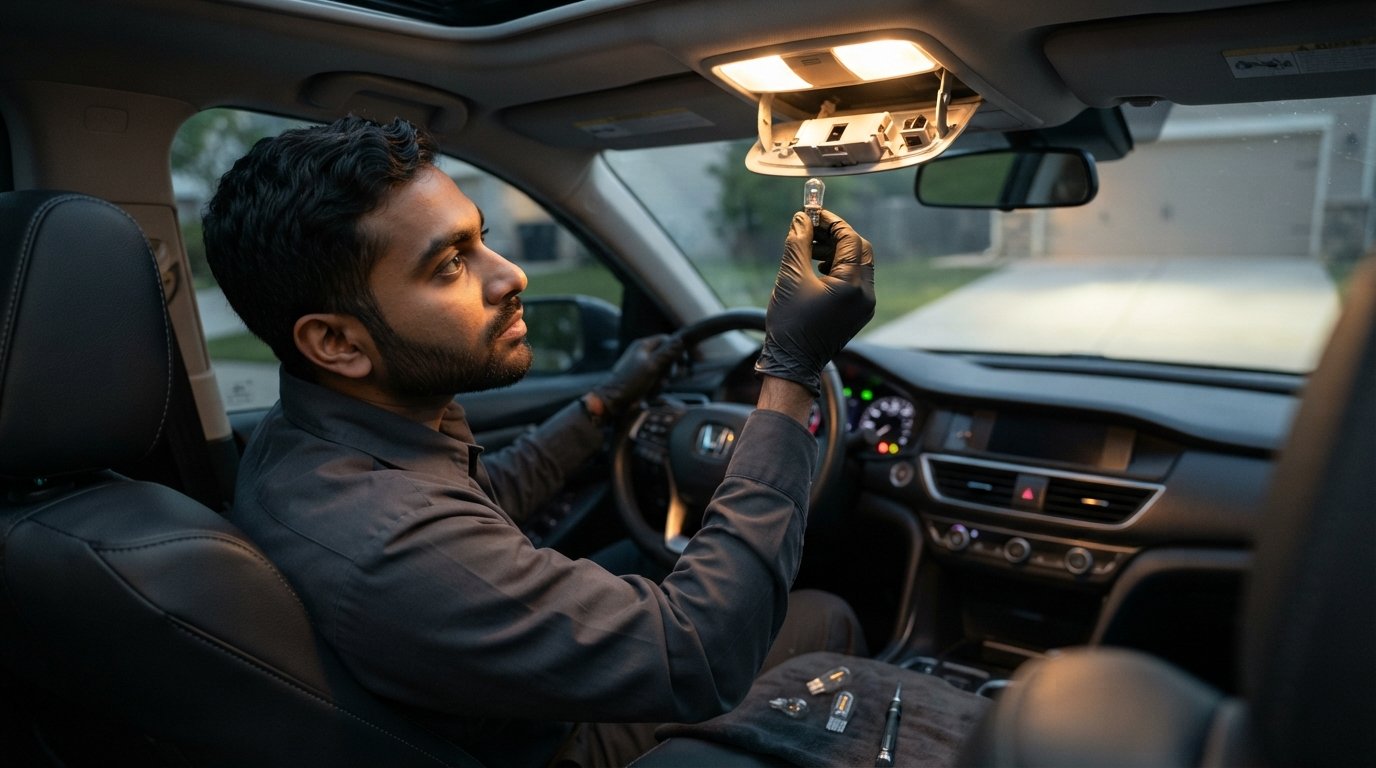
How to Replace a Car Light Bulb
The exact procedure depends on the vehicle.
A general replacement process is:
1. Turn Off the Vehicle
Switch off the engine, lights, and electrical accessories.
2. Allow the Bulb to Cool
If the bulb was operating, allow it to cool before handling it.
3. Locate the Bulb
Access the bulb through the engine compartment, rear light housing, interior trim, or another designated access point.
4. Remove the Old Bulb
Disconnect the electrical connector and remove the bulb according to the vehicle’s design.
5. Install the New Bulb
Insert the replacement bulb correctly and reconnect the electrical connector.
6. Test the Light
Turn on the appropriate light and confirm that it works.
7. Check the Dashboard
If the vehicle has a bulb warning system, make sure the warning disappears after the problem is corrected.
Can You Touch a Car Headlight Bulb?
If your vehicle uses a halogen headlight bulb, avoid touching the glass with bare fingers.
Skin oils can remain on the glass and create uneven heating when the bulb operates.
Hold the bulb by its base whenever possible and follow the bulb manufacturer’s installation instructions.
LED and other headlight technologies may have different handling requirements.
Why Does My New Car Bulb Keep Burning Out?
If a replacement bulb fails quickly, replacing it repeatedly may not solve the problem.
Possible causes include:
- Excessive voltage
- Poor-quality bulb
- Loose socket
- Vibration
- Moisture
- Wiring problems
- Incorrect bulb specification
- Excessive heat
- Charging-system problems
If the same bulb repeatedly fails, have the electrical circuit inspected.
Why Is My Car Interior Light Staying On?
A car interior light that stays on can drain the battery.
Possible causes include:
- Door not fully closed
- Faulty door switch
- Interior-light switch in the wrong position
- Trunk or hatch not fully closed
- Faulty body-control system
- Incorrect installation of an aftermarket accessory
Check every door, trunk, and hatch.
Many vehicles have an interior-light switch with positions such as:
- On
- Door
- Off
Make sure the switch is set correctly.
Why Won’t My Car Interior Light Turn On?
If an interior light does not work, possible causes include:
- Burned-out bulb
- Blown fuse
- Bad socket
- Door switch problem
- Faulty wiring
- Interior-light switch problem
- Body-control module issue
Start with the bulb and fuse before investigating more complicated electrical components.
What Is the Light Bulb in the Dashboard?
Dashboard lighting can mean two different things.
The first is instrument-panel illumination, which lights gauges and controls.
The second is a dashboard warning indicator, which communicates information about the vehicle.
Examples include:
- Check engine light
- Battery warning light
- Oil pressure warning
- Brake warning
- Tire-pressure warning
- High-beam indicator
- Turn-signal indicator
- Exterior-lighting warning
The meaning depends on the symbol.
Car Light Bulb Symbol on Dashboard
If a bulb-shaped warning symbol appears, the vehicle may be indicating a problem with an exterior light.
Check:
- Headlights
- Tail lights
- Brake lights
- Turn signals
- Reverse lights
- License plate lights
- Fog lights, if equipped
If all bulbs appear to work but the warning remains, the vehicle may require electrical diagnosis.
What Does the Battery Light Have to Do With Car Lights?
A battery warning light is different from a bulb warning light.
If the battery-shaped warning indicator appears while driving, it can indicate a problem with the vehicle’s charging system.
Possible causes include:
- Alternator problem
- Charging-system fault
- Drive belt issue
- Wiring problem
- Battery or electrical-system issue
This warning should not be confused with an ordinary light-bulb failure.
Can a Bad Alternator Cause Car Lights to Flicker?
Yes.
An alternator or charging-system problem can cause electrical voltage fluctuations that may result in flickering lights.
Other possible symptoms include:
- Battery warning light
- Difficulty starting
- Dim headlights
- Electrical accessories behaving strangely
- Battery repeatedly losing charge
If multiple lights flicker, especially while the engine is running, the charging system should be checked.
Car Light Bulb Replacement Cost
The cost of car light bulb replacement depends on the vehicle and bulb type.
A simple bulb replacement may be relatively inexpensive when the bulb is easily accessible.
Costs can increase when:
- The bulb is difficult to access.
- The entire lamp assembly must be removed.
- The vehicle uses specialized LED modules.
- HID components are involved.
- Additional wiring repairs are necessary.
Labor costs also vary between repair shops and vehicle models.
How Often Should Car Light Bulbs Be Replaced?
There is no universal replacement interval for every automotive bulb.
Halogen bulbs typically have a finite operating life and eventually require replacement.
LED systems can last much longer, but they can still fail.
Instead of replacing bulbs on a fixed schedule, inspect vehicle lighting regularly and replace failed or damaged components promptly.
Should You Replace Car Headlight Bulbs in Pairs?
For some types of headlights, replacing both bulbs at the same time can be beneficial.
If one halogen headlight bulb has failed after many years of use, the other may also be nearing the end of its service life.
Replacing both can also help maintain similar brightness and color.
However, follow your vehicle manufacturer’s recommendations and consider the condition of the other bulb.
LED vs Halogen Car Bulbs
| Feature | LED | Halogen |
|---|---|---|
| Energy use | Generally lower | Generally higher |
| Lifespan | Generally longer | Generally shorter |
| Heat | Lower overall system power, but LEDs still require heat management | High bulb heat |
| Brightness | Varies by product | Predictable for original applications |
| Installation | Vehicle-dependent | Often straightforward |
| Compatibility | Important to verify | Usually designed around vehicle specification |
Aftermarket LED replacements are not automatically suitable for every vehicle.
Can You Replace Halogen Car Bulbs With LED?
Sometimes, but compatibility must be checked.
Important considerations include:
- Physical fit
- Electrical compatibility
- Beam pattern
- Heat management
- CAN Bus compatibility
- Headlight housing design
- Local regulations
An LED bulb that physically fits may not produce the correct beam pattern in a headlight designed for halogen technology.
Why Is My LED Car Bulb Showing an Error?
Modern vehicles can monitor the electrical load of lighting circuits.
An aftermarket LED replacement may draw less current than the original bulb.
The vehicle can interpret this lower current as a bulb failure.
Depending on the vehicle, a compatible CAN Bus LED bulb or appropriate load-management solution may be required.
Always use products designed for your specific vehicle.
Car Light Bulb Safety Tips
Follow these basic safety practices:
- Turn off the vehicle before replacing bulbs.
- Allow hot bulbs to cool.
- Use the correct bulb specification.
- Don’t force a bulb into the wrong socket.
- Avoid touching halogen glass.
- Keep electrical connectors dry.
- Inspect damaged wiring.
- Follow the owner’s manual.
- Replace damaged bulbs promptly.
- Check headlights and brake lights regularly.
For high-voltage HID systems or complex electrical faults, professional service may be appropriate.
Frequently Asked Questions
1. What does the light bulb warning light mean in a car?
It commonly indicates that the vehicle has detected a problem with one or more exterior lights, although the exact meaning depends on the vehicle.
2. Why is my car light bulb warning light on?
A failed bulb, LED fault, wiring problem, poor connection, incorrect bulb, or other lighting-system issue can trigger the warning.
3. How do I know which car light bulb I need?
Check the owner’s manual, existing bulb number, or vehicle-specific bulb application information. Match the correct bulb type, base, voltage, and wattage.
4. Can I replace a halogen car bulb with an LED?
Sometimes, but compatibility, beam pattern, electrical requirements, heat management, and applicable regulations must be considered.
5. Why is my car light flickering?
A loose connection, failing bulb, wiring problem, incompatible LED, or vehicle charging-system issue can cause flickering.
6. Why is my interior car light staying on?
A door, trunk, or hatch may not be fully closed, or there may be a problem with the interior-light switch or door sensor.
7. Can a car light drain the battery?
Yes. An interior or exterior light that remains on while the vehicle is parked can eventually drain the battery.
8. Why does my new car bulb keep burning out?
Repeated bulb failure can result from excessive voltage, vibration, heat, moisture, a poor connection, an incorrect bulb, or an electrical-system problem.
9. Should I replace both headlights at the same time?
Replacing both can help maintain similar brightness and color, particularly when replacing older halogen bulbs, but it depends on the vehicle and condition of the remaining bulb.
10. What does a bulb-shaped warning light mean?
It may indicate an exterior-lighting fault. Check the vehicle’s headlights, brake lights, turn signals, tail lights, and other exterior lamps, then consult the owner’s manual.
11. Are LED car bulbs better than halogen?
LEDs can offer lower energy consumption and longer service life, but the best choice depends on the vehicle, original lighting system, compatibility, and legal requirements.
Final Thoughts
A light bulb light in a car can refer to an actual automotive bulb or a dashboard indicator showing that the vehicle has detected a lighting problem. Understanding the difference is important because a failed exterior bulb can affect both visibility and road safety. When a car light bulb warning appears, inspect the headlights, brake lights, tail lights, turn signals, reverse lights, and license plate lights. If everything appears to work but the warning remains, the vehicle may have an electrical, wiring, sensor, or control-module issue.
For replacement, always choose the correct automotive light bulb based on your vehicle’s make, model, year, bulb number, voltage, wattage, and application. If the same bulb repeatedly fails or multiple lights flicker, investigate the underlying electrical system rather than repeatedly replacing bulbs. Regularly checking your vehicle’s lighting system is a simple way to improve visibility, maintain safety, and identify electrical problems before they become more serious.
Related Post
- Non Led Light Bulbs – Complete Guide to Incandescent, Halogen, CFL, Types, Benefits, and Uses!
- Sylvania Bulb Finder – Complete Guide to Finding the Right Sylvania Light Bulb!
- T12 Bulbs – Complete Guide to Sizes, Wattage, Types, Replacement, and Compatibility!
About the Author