Finding the correct light bulb can be confusing when you are faced with different shapes, sizes, wattages, bases, color temperatures, and technologies. The Sylvania Bulb Finder is designed to make the process easier by helping users identify a suitable Sylvania bulb for a particular fixture or application.
Whether you need a replacement for a household lamp, ceiling fixture, recessed light, outdoor fixture, automotive application, or specialty lighting system, understanding how a Sylvania bulb finder works can help you select the right replacement.
This guide explains how to find the correct Sylvania bulb, how to read bulb numbers, how to match wattage and base types, and what to check before purchasing a replacement.
What Is the Sylvania Bulb Finder?
The Sylvania Bulb Finder is a tool or product-identification approach used to help consumers find an appropriate Sylvania lighting product based on their existing bulb or lighting application.
Instead of choosing a bulb based only on its appearance, you can compare important specifications such as:
- Bulb shape
- Bulb size
- Base type
- Wattage
- Voltage
- Lumens
- Color temperature
- Technology
- Fixture type
- Application
Using these details can significantly reduce the chance of purchasing an incompatible replacement.
Why Is a Bulb Finder Useful?
Light bulbs may look similar while having completely different specifications.
For example, two bulbs might have a similar glass shape but different:
- Base sizes
- Voltages
- Wattages
- Beam angles
- Applications
- Color temperatures
A Sylvania light bulb finder can therefore be useful when you know what type of lighting you need but are unsure which exact bulb to purchase.
How to Find the Right Sylvania Bulb
The easiest way to find a replacement is to start with the information printed on your existing bulb.
Look for markings such as:
- Sylvania
- Bulb model number
- Wattage
- Voltage
- Bulb type
- Base designation
- Color temperature
If the original bulb is unavailable, inspect the fixture and determine the required bulb shape and base.
Check the Bulb Shape
One of the first things to identify is the bulb’s shape.
Common household bulb shapes include:
- A19
- A21
- BR30
- BR40
- PAR20
- PAR30
- PAR38
- MR16
- G25
- G40
- T-series bulbs
The shape designation helps identify how the bulb is designed to distribute light and fit into the fixture.
What Does A19 Mean?
A19 is one of the most common household light bulb designations.
The “A” refers to the traditional general-service bulb shape, while “19” represents the approximate diameter in eighths of an inch.
A19 bulbs are commonly used in:
- Table lamps
- Floor lamps
- Ceiling fixtures
- Bedroom lights
- Living-room fixtures
- General household lighting
What Does A21 Mean?
An A21 bulb has a similar traditional shape to an A19 but is larger.
A21 bulbs are often used for general illumination where the fixture provides enough space for the larger bulb.
Always check the fixture’s maximum bulb size before purchasing.
Sylvania Bulb Base Types
The bulb base is just as important as the bulb shape.
Common base types include:
E26 Base
The E26 screw base is extremely common in North American household lighting.
It is frequently used in:
- Lamps
- Ceiling fixtures
- Outdoor lights
- Decorative fixtures
E12 Base
An E12 is a smaller screw base commonly found on:
- Chandeliers
- Decorative lamps
- Night lights
- Ceiling fans
- Accent fixtures
GU10 Base
GU10 bulbs are commonly associated with certain directional and recessed lighting applications.
GU5.3 Base
GU5.3 bases are often used with MR16-style lamps and can be found in low-voltage lighting systems.
The base must match the fixture exactly.
How to Read Sylvania Bulb Numbers

Sylvania bulb numbers can contain letters and numbers that identify characteristics of the lamp.
Depending on the product, the marking may provide information about:
- Bulb shape
- Wattage
- Voltage
- Base
- Lamp technology
- Application
- Product series
For the most accurate identification, use the complete number printed on the bulb rather than only part of the code.
Sylvania LED Bulb Finder
LED bulbs are among the most popular modern Sylvania lighting products.
When selecting a Sylvania LED bulb, consider:
- Equivalent wattage
- Actual wattage
- Lumens
- Color temperature
- Base
- Shape
- Dimmability
- Indoor/outdoor rating
LED bulbs can provide similar illumination to traditional incandescent lamps while generally using less electricity.
Sylvania LED Bulb Equivalent Wattage
LED bulbs are often marketed using an incandescent-equivalent rating.
For example, an LED may be described as a replacement for a traditional:
- 40-watt bulb
- 60-watt bulb
- 75-watt bulb
- 100-watt bulb
However, equivalent wattage is primarily a consumer-friendly comparison.
For a more accurate comparison, look at lumens.
What Are Lumens?
Lumens measure visible light output.
A higher lumen rating generally means the bulb produces more visible light.
When replacing an incandescent bulb with an LED, comparing lumens is often more useful than simply comparing watts.
Watts measure energy consumption, not brightness.
Sylvania Bulb Color Temperature
Color temperature determines how warm or cool the light appears.
Common choices include:
| Color Temperature | Appearance | Typical Use |
|---|---|---|
| 2200K | Very warm | Decorative lighting |
| 2700K | Warm white | Bedrooms and living rooms |
| 3000K | Soft/neutral warm | Kitchens and bathrooms |
| 4000K | Cool/neutral | Offices and work areas |
| 5000K | Daylight | Garages and workspaces |
| 6500K | Very cool daylight | Specialty applications |
Choosing the correct color temperature can dramatically change the appearance of a room.
Warm White vs Daylight Sylvania Bulbs
A warm-white Sylvania bulb produces a softer, more yellow appearance.
It can work well in:
- Bedrooms
- Living rooms
- Dining areas
- Decorative lamps
A daylight bulb produces a cooler, brighter-looking appearance.
It may be useful in:
- Garages
- Workshops
- Offices
- Utility areas
Is the Sylvania Bulb Dimmable?
Not every LED bulb is compatible with dimmer switches.
If your fixture uses a dimmer, look for a Sylvania bulb specifically labeled dimmable.
Using a non-dimmable LED on an incompatible dimmer can cause:
- Flickering
- Buzzing
- Limited dimming range
- Unexpected shutoff
- Unstable brightness
Always verify compatibility between the bulb and dimmer.
Sylvania Smart Bulbs
Some Sylvania lighting products are designed for smart-home applications.
Depending on the product, smart bulbs may offer features such as:
- App control
- Scheduling
- Dimming
- Color adjustment
- Voice control
- Remote operation
Smart bulb compatibility varies by product, platform, and connection technology.
Sylvania Bulb Finder for Ceiling Fans
Ceiling fans frequently use specific bulb sizes and bases.
Before choosing a Sylvania ceiling fan bulb, check:
- Fixture clearance
- Base type
- Maximum wattage
- Bulb shape
- Dimmability
- Enclosed-fixture rating if applicable
A bulb that physically screws into a socket may still be unsuitable if the fixture has specific electrical or heat requirements.
Sylvania Bulb Finder for Recessed Lighting
Recessed fixtures commonly use reflector-style bulbs.
Popular formats include:
- BR30
- BR40
- PAR30
- PAR38
- MR16
The correct choice depends on the fixture’s dimensions and socket.
Measure the existing bulb and check the fixture specifications before replacing it.
Sylvania Bulb Finder for Outdoor Lights
Outdoor fixtures require additional consideration.
Look for bulbs specifically rated for the intended environment.
Important factors include:
- Wet-location rating
- Damp-location rating
- Temperature range
- Bulb durability
- Fixture enclosure
- Base type
Not every indoor LED bulb is suitable for outdoor use.
Sylvania Bulbs for Enclosed Fixtures
Some fixtures completely surround the bulb with glass or another enclosure.
Heat can accumulate inside these fixtures.
If a fixture is enclosed, choose a bulb specifically rated for enclosed-fixture use when required by the manufacturer.
This is especially important with LED bulbs because operating temperature can affect their performance and lifespan.
Sylvania Automotive Bulb Finder
Sylvania also has a major presence in automotive lighting.
An automotive bulb finder can help identify bulbs used for applications such as:
- Headlights
- Brake lights
- Turn signals
- Tail lights
- Fog lights
- Interior lights
- Reverse lights
Automotive bulb compatibility depends heavily on the exact vehicle.
You should use the vehicle’s:
- Year
- Make
- Model
- Trim
- Existing bulb number
to identify the appropriate replacement.
How to Find a Sylvania Headlight Bulb
To find the correct headlight bulb, start with your vehicle’s recommended bulb number.
Common automotive bulb designations include numbers such as:
- 9005
- 9006
- H1
- H4
- H7
- H11
- 9012
These bulbs are not automatically interchangeable.
Always verify the exact bulb specification for the vehicle.
Sylvania Bulb Finder by Vehicle
For automotive lighting, vehicle-specific lookup is much safer than choosing a bulb based on appearance.
Enter or verify:
- Vehicle year
- Manufacturer
- Model
- Trim or configuration
- Lighting position
Different trims of the same vehicle can sometimes use different bulbs.
How to Find a Replacement Sylvania Bulb Without the Original
If you no longer have the old bulb, don’t guess.
Instead:
- Identify the fixture or vehicle.
- Check the owner’s manual.
- Look for a label on the fixture.
- Determine the required voltage.
- Identify the socket/base.
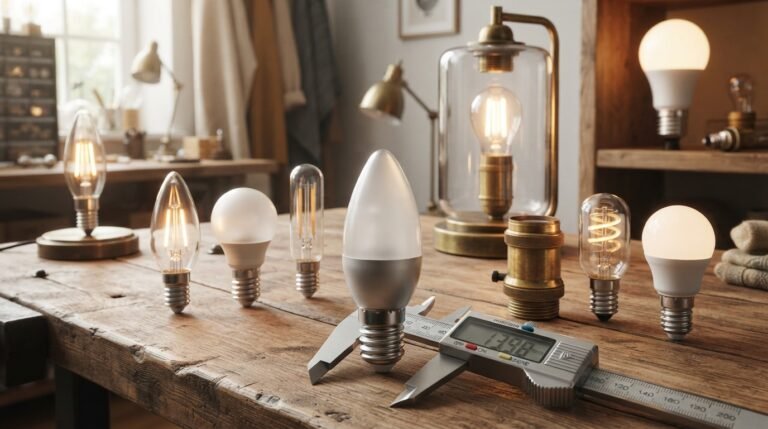
- Measure the available space.
- Select the appropriate bulb technology.
- Compare lumen output and color temperature.
For automotive bulbs, use the vehicle’s exact specifications.
Why Won’t My New Sylvania Bulb Work?
If a new bulb does not work, check:
- Correct bulb type
- Correct base
- Correct voltage
- Fixture switch
- Wiring
- Socket condition
- Dimmer compatibility
- Fixture limitations
For LED bulbs, compatibility with the fixture or dimmer can also be important.
If multiple bulbs fail in the same fixture, the problem may not be the bulb itself.
Why Is My Sylvania LED Bulb Flickering?
LED flickering can occur because of:
- Incompatible dimmer
- Poor electrical connection
- Voltage fluctuations
- Faulty bulb
- Fixture compatibility issues
If the bulb flickers only when connected to a dimmer, verify that both the bulb and dimmer are designed to work together.
Why Does My Sylvania Bulb Burn Out Quickly?
Premature bulb failure can have several causes.
Possible reasons include:
- Excessive heat
- Incorrect voltage
- Poor-quality electrical connections
- Frequent switching
- Enclosed fixture incompatibility
- Fixture problems
- Defective bulb
If replacement bulbs repeatedly fail in the same fixture, have the fixture checked rather than continually replacing bulbs.
Sylvania Bulb Wattage Guide
When selecting a replacement, consider both actual wattage and fixture limitations.
For LED bulbs, a product may advertise an incandescent equivalent while consuming significantly fewer watts.
For example:
| Traditional Incandescent | Approximate LED Category |
|---|---|
| 40W | Lower-wattage LED |
| 60W | Medium-output LED |
| 75W | Higher-output LED |
| 100W | High-output LED |
These are general comparisons. Always use the bulb’s actual lumen rating and manufacturer’s specifications for an accurate selection.
How to Choose the Best Sylvania Bulb
The best Sylvania bulb depends on the application.
For general household lighting, look for:
- Correct base
- Correct physical size
- Appropriate lumen output
- Desired color temperature
- Dimmability if needed
- Appropriate fixture rating
For outdoor applications, prioritize environmental ratings.
For automotive applications, prioritize vehicle-specific compatibility.
Sylvania Bulb Finder vs Guessing a Replacement
Using a bulb finder or identifying the original bulb’s specifications is generally safer than guessing.
A wrong bulb can result in:
- Poor fit
- Incorrect brightness
- Electrical incompatibility
- Flickering
- Overheating
- Reduced lifespan
Taking a few minutes to identify the correct bulb can prevent unnecessary purchases.
Frequently Asked Questions
1. What is the Sylvania Bulb Finder?
The Sylvania Bulb Finder is a way to identify an appropriate Sylvania bulb based on specifications such as application, bulb type, size, base, vehicle information, or existing bulb number.
2. How do I find the correct Sylvania bulb?
Check the number printed on the existing bulb, identify its base and shape, and compare its voltage, wattage, lumen output, and application requirements.
3. What is the most common Sylvania household bulb?
Sylvania produces many household bulb types, but common residential formats include A19 bulbs with standard screw bases.
4. How do I know what bulb size I need?
Check the existing bulb, fixture label, owner’s manual, or manufacturer’s specifications. You can also measure the bulb and identify its base.
5. What does A19 mean on a Sylvania bulb?
A19 describes a common household bulb shape and its approximate diameter.
6. What does E26 mean?
E26 is a common medium Edison screw base used for many household light bulbs.
7. Are all Sylvania LED bulbs dimmable?
No. Dimmability depends on the specific bulb. Check the product specifications for a dimmable rating before using an LED with a dimmer.
8. Can I use a Sylvania LED bulb in an old fixture?
Often yes, provided the LED bulb’s voltage, base, size, fixture rating, and other requirements are compatible.
9. How do I find a Sylvania automotive bulb?
Use the vehicle’s year, make, model, trim, and lighting position, or check the bulb number printed on the existing automotive bulb.
10. How do I know how bright a Sylvania bulb is?
Look at the lumens rather than relying only on wattage or incandescent-equivalent labeling.
11. What color temperature should I choose?
For a warm, comfortable appearance, 2700K–3000K is popular. For cooler, daylight-style illumination, 4000K–5000K is often preferred.
12. Why is my new Sylvania LED bulb flickering?
Check dimmer compatibility, socket connections, fixture compatibility, and voltage. If the problem continues, the bulb or fixture may need replacement or inspection.
Final Thoughts
The Sylvania Bulb Finder can make the process of choosing a replacement light bulb much easier by focusing on the specifications that actually determine compatibility. Instead of selecting a bulb based only on its appearance, check the bulb shape, base, wattage, voltage, lumens, color temperature, dimmability, and fixture requirements.
For household lighting, common specifications such as A19, A21, E26, E12, BR30, PAR38, lumens, and color temperature can help narrow down the correct choice. For automotive lighting, always identify the exact vehicle and bulb number before purchasing. Whether you’re replacing an old incandescent bulb, upgrading to a Sylvania LED bulb, finding a bulb for an outdoor fixture, or identifying an automotive headlight, matching the complete specifications is the best way to avoid compatibility problems and get the lighting performance you expect.
Related Post
- Tanning Bed Bulbs – Complete Guide to Types, Wattage, Replacement, and Safety!
- Tungsten Bulb Vs Led – Which Light Bulb Is Better?
- Type A Bulb – Complete Guide to Types, Sizes, Uses, and Replacement!
About the Author