The Emporia Classic Level 2 EV Charger is a smart home charging station designed for drivers who want faster 240V charging without paying for every advanced energy-management feature offered by Emporia’s higher-end Pro model.
The current Classic supports up to 48 amps and 11.5 kW when hardwired, while the NEMA 14-50 plug-in configuration supports up to 40 amps and 9.6 kW. It is available with either a J1772 or NACS connector, depending on the version selected. Emporia currently lists the Classic starting at $449 and includes a 25-foot charging cable, wall mount, handle holder, and mounting hardware.
But the important question isn’t simply whether the charger can deliver 48 amps.
The right configuration depends on your EV, electrical panel, installation method, connector, charging habits, and whether you need advanced features such as dynamic load management or deeper home-energy integration.
This guide explains everything you should know before buying or installing an Emporia Classic EV Charger.
What Is the Emporia Classic Level 2 EV Charger?
The Emporia Classic is a Level 2 AC home EV charger designed to charge an electric vehicle considerably faster than a typical 120V Level 1 connection.
It operates from a 208/240V supply and can be configured as either a plug-in or hardwired installation. The current specifications list charging outputs of:
- 240V / 48A = 11.5 kW
- 240V / 40A = 9.6 kW
- 208V / 48A = 10 kW
- 208V / 40A = 8.3 kW
The required dedicated breaker is listed as 50A or greater for 40A charging and 60A or greater for 48A charging.
The charger is available with either:
- SAE J1772
- NACS / Tesla connector
That gives buyers a way to select the cable/connector that best matches their vehicle and charging setup.
Emporia Classic EV Charger Specifications
Here are the key specifications currently published by Emporia:
| Specification | Emporia Classic |
|---|---|
| Charger type | Level 2 AC EV charger |
| Input | 208/240V AC, 50/60Hz |
| Maximum hardwired output | 48A |
| Maximum hardwired power | 11.5 kW at 240V |
| Maximum plug-in output | 40A |
| Plug-in power | 9.6 kW at 240V |
| Cable length | 25 feet |
| Connector options | J1772 or NACS |
| Installation | NEMA 14-50 or hardwire |
| Enclosure | NEMA Type 4 |
| Warranty | 3 years |
| App | Emporia Energy app |
| PowerSmart | Optional paid upgrade |
| Outdoor use | Yes, when installed according to requirements |
Emporia lists the Classic as certified to several EV-related standards, including UL 2594, UL 2251 and NEC 625 requirements.
How Fast Does the Emporia Classic Charge?
The maximum charging rate depends on the installation.
48A Hardwired Charging
With a suitable hardwired installation, the Classic can reach:
240V × 48A = 11.52 kW
Emporia lists this as approximately 11.5 kW.
40A NEMA 14-50 Charging
With the plug-in NEMA 14-50 configuration, the maximum is:
240V × 40A = 9.6 kW
This difference is important because simply purchasing a 48A-capable charger does not mean you’ll receive 48A when using the plug-in configuration.
40A vs 48A: Which Emporia Classic Configuration?
The difference is mainly about installation and available electrical capacity.
| Configuration | Maximum Current | Approx. Power at 240V |
|---|---|---|
| NEMA 14-50 | 40A | 9.6 kW |
| Hardwired | 48A | 11.5 kW |
The NEMA plug is easier to disconnect and can be convenient for certain installations.
Hardwiring provides the higher 48A capability and can provide a cleaner permanent installation.
Your vehicle also matters. If your EV’s onboard AC charger cannot accept the full available current, installing the 48A configuration will not make that vehicle charge at 48A.
Emporia Classic NEMA 14-50 vs Hardwire
This is one of the most important decisions when purchasing the charger.
NEMA 14-50
A NEMA 14-50 version can be convenient when you already have an appropriate outlet.
However, Emporia specifically states that the outlet must be a 50A, industrial-grade, continuous-duty receptacle suitable for EV charging. The company recommends brands including Hubbell, Leviton, Bryant, and Cooper/Eaton.
The plug-in version is limited to 40A.
Hardwired
Hardwiring allows the Classic to operate at up to 48A when the electrical installation supports it.
Emporia recommends professional installation for a hardwired charger.
Which Installation Should You Choose?
The answer depends on:
- Your panel capacity
- Existing wiring
- Desired charging rate
- Local electrical requirements
- Installation location
- Whether portability matters
- Whether your vehicle benefits from more than 40A
An electrician should determine the appropriate circuit, conductor sizing, breaker, and installation method.
Emporia Classic J1772 vs NACS
The Classic is available with different connector options.
J1772
J1772 has been widely used for AC charging among North American EVs.
Tesla vehicles can use a suitable adapter where appropriate.
NACS
NACS, also referred to as SAE J3400, is the connector used by Tesla and increasingly adopted by other automakers.
Emporia offers the Classic with NACS as a separate configuration.
Which One Should You Buy?
Choose the connector based on your vehicle and how you expect your EV setup to evolve.
If your current vehicle has a J1772 inlet, the J1772 version may be the straightforward choice.
If your vehicle uses NACS, the NACS version provides a native connector.
The important point is to verify your vehicle’s actual AC charging connector before ordering.
Does the Emporia Classic Work With Tesla?
The answer depends on which connector version you purchase and the vehicle’s charging setup.
Emporia offers a NACS/Tesla version of the Classic, while the J1772 version can be used with compatible vehicles and appropriate adapters where applicable.
Tesla owners should verify the connector and charging requirements of their particular vehicle before purchasing.
Does the Emporia Classic Work With a Ford Mustang Mach-E?
Yes, the Emporia Classic is relevant to Mustang Mach-E owners using the appropriate connector configuration.
The Reddit discussion you supplied specifically includes Mach-E owners discussing Emporia chargers, including both Classic and Pro models. Several commenters described using Emporia chargers with their vehicles and discussed hardwiring, app scheduling, and long-term ownership.
Community reports are useful for understanding ownership experiences, but they should not replace the manufacturer’s specifications or an electrician’s assessment of an installation.
Emporia Classic Smart Charging Features
The Classic is more than a basic plug-and-charge EVSE.
Emporia’s app allows users to monitor charging and manage charging schedules. The company’s current product information says users can visualize charging costs and savings and synchronize charging with utility rates to charge during lower-cost periods.
Useful smart features include:
- Charging schedules
- Remote charger control
- Charging history
- Energy-use information
- Cost tracking
- Utility-rate scheduling
These features can be particularly useful for drivers whose electricity prices vary throughout the day.
Emporia EV Charger App
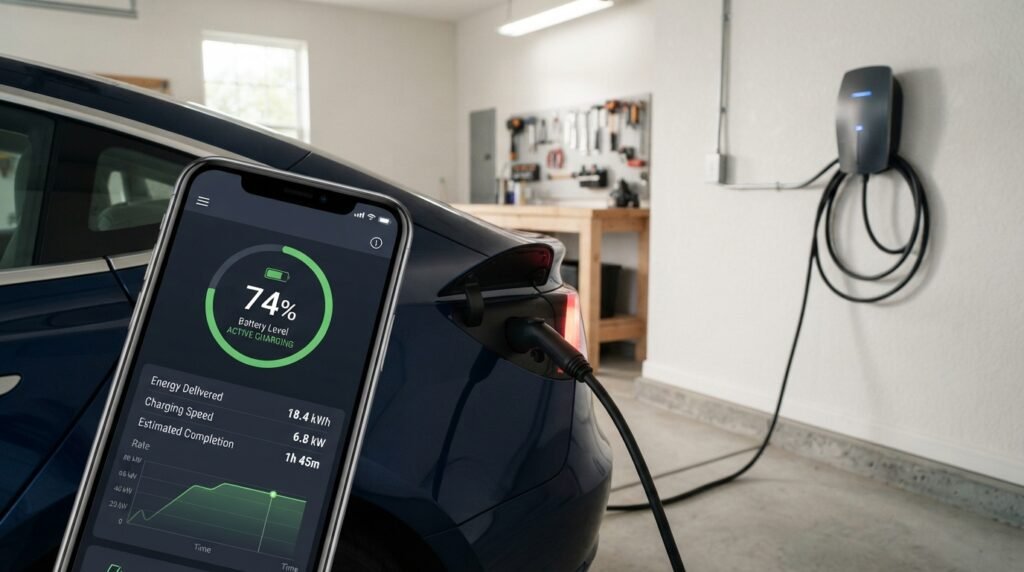
The Emporia Energy app is an important part of the Classic’s smart functionality.
Depending on the configuration and connected Emporia products, the app can provide information about:
- Current charging
- Charging sessions
- Energy consumption
- Charging costs
- Schedules
- Utility rates
- Home energy usage
Emporia also currently promotes conversational access to charging and energy data through an AI assistant within its ecosystem.
The advantage of this approach is that you can treat charging as part of a broader energy-management system rather than simply plugging in the car.
Can the Emporia Classic Charge During Off-Peak Hours?
Yes.
Emporia says the Classic supports smart scheduling, including charging during lower-cost utility periods.
For example, if your electricity provider offers cheaper overnight rates, you can configure the charging schedule so the vehicle charges during that period.
This can reduce the cost of charging compared with charging during expensive peak periods, although the actual savings depend on your utility’s rate structure.
Does the Emporia Classic Support Solar Charging?
The answer requires an important distinction.
The Classic can participate in Emporia’s broader energy ecosystem, but advanced solar and load-management functions require additional Emporia hardware/software.
Emporia states that adding the Vue Home Energy Monitor enables features such as home-energy monitoring and charging with excess solar power.
So the basic Classic charger should not be confused with a complete solar-energy-management system.
What Is PowerSmart?
PowerSmart is Emporia’s dynamic load-management system.
It monitors whole-home electrical consumption through an Emporia Vue energy monitor and dynamically adjusts EV charging so the home stays within the configured electrical capacity.
This is particularly relevant for homes where installing a high-power Level 2 charger could otherwise require an electrical-service upgrade.
Is PowerSmart Included With the Classic?
No.
Emporia currently includes PowerSmart with the Emporia Pro, while Classic owners can add it separately for an additional cost.
Emporia’s current documentation lists the Classic upgrade at:
- $125 for the software upgrade if you already have an eligible Emporia energy monitor
- $200 for the upgrade plus an energy monitor if you do not already have one.
Prices and eligibility can change, so verify current pricing with Emporia before purchasing.
Emporia Classic vs Pro
The Classic and Pro share the basic Level 2 charging concept, but they target different installation and energy-management needs.
| Feature | Emporia Classic | Emporia Pro |
|---|---|---|
| Level 2 charging | Yes | Yes |
| Maximum charging | Up to 48A | Up to 48A |
| NEMA plug | Yes | Yes |
| Hardwire | Yes | Yes |
| Smart scheduling | Yes | Yes |
| App control | Yes | Yes |
| PowerSmart | Paid add-on | Included |
| Vue energy monitor | Optional | Included for PowerSmart |
| Starting price listed by Emporia | $449 | $599 |
| Warranty | 3 years | 3 years |
Emporia’s current comparison identifies the Pro as the option with integrated energy-management capabilities, while the Classic is the lower-cost entry point with smart charging.
When Does the Emporia Pro Make More Sense?
The Pro becomes particularly relevant if your home has limited electrical capacity and you want integrated dynamic load management.
Emporia says the Pro includes a Vue 3 Energy Monitor and PowerSmart capability, allowing charging power to adjust according to the home’s real-time electrical consumption.
For someone with a comfortable amount of spare electrical capacity who simply wants smart Level 2 charging, the Classic provides a simpler configuration.
For someone investigating load management, the Pro may eliminate the need to buy those components separately.
The important point is to compare the complete installed system cost, rather than just comparing charger sticker prices.
Emporia Classic Electrical Panel Requirements
A Level 2 charger is a substantial electrical load.
For the Classic, Emporia specifies:
- 50A+ dedicated dual-pole breaker for 40A charging
- 60A+ dedicated dual-pole breaker for 48A charging
This does not mean every home can simply install one of these breakers.
Your electrical service, panel, existing loads, wiring, local code requirements, and available capacity all matter.
If your home already has major electrical loads such as:
- Electric heating
- Heat pump
- Electric water heater
- Electric dryer
- Electric range
- Other EV chargers
the panel may need additional assessment.
Does the Emporia Classic Need a 60A Breaker?
For the maximum 48A charging configuration, Emporia lists a dedicated 60A or greater dual-pole breaker.
For 40A charging, Emporia lists a 50A or greater dedicated dual-pole breaker.
Because EV charging is a continuous load, the installation must comply with applicable electrical requirements.
Do not select a breaker based only on the charger’s maximum amperage. The complete circuit must be designed appropriately.
Emporia Classic and GFCI Breakers
GFCI protection deserves special attention with EV chargers.
Emporia says its charger has built-in GFCI protection and warns that an additional GFCI-protected circuit can create nuisance tripping under some configurations. The company’s current documentation recommends consulting a professional because local requirements and the interaction between NEC and EVSE certification requirements can affect the appropriate installation method.
This is one reason electrical installation should be evaluated by someone familiar with EV charging requirements.
Is the Emporia Classic Weatherproof?
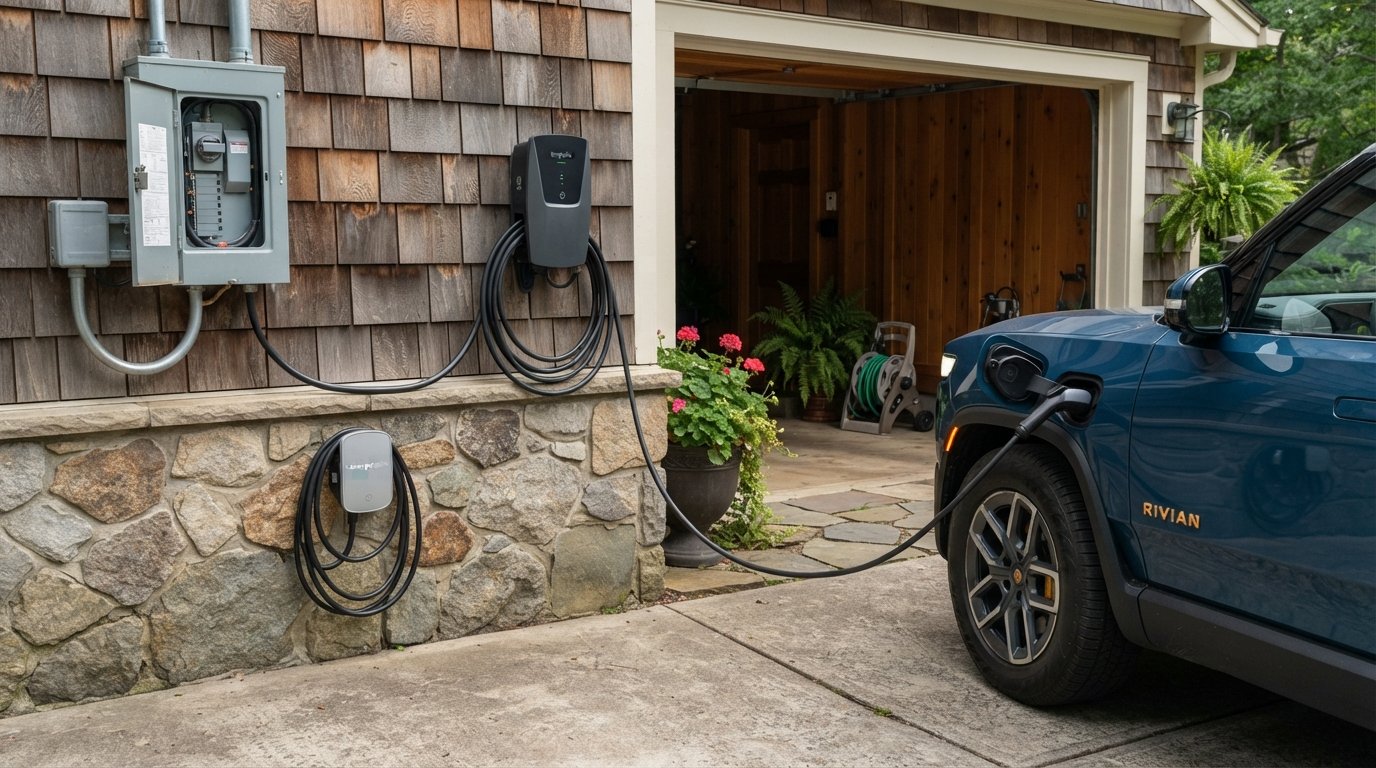
The current Classic specification identifies the enclosure as NEMA Type 4, and Emporia markets the charger for indoor and outdoor use.
That makes outdoor installation possible when the installation follows the manufacturer’s requirements.
However, weather resistance does not mean the charger can simply be installed anywhere.
Consider:
- Mounting surface
- Cable routing
- Electrical connection
- Water exposure
- Local code
- Outlet protection
- Physical protection from vehicles
How Long Is the Emporia Classic Cable?
The current Classic package includes a 25-foot charging cable.
A 25-foot cable can provide useful flexibility when the vehicle cannot park directly beside the charger.
Before installation, consider where the vehicle’s charge port is located and where the charger will be mounted.
Cable length can affect everyday convenience more than buyers sometimes expect.
What Comes With the Emporia Classic?
Emporia currently lists the following items:
- Emporia Classic Level 2 EV Charger
- 25-foot charging cable
- Wall mount
- Handle holder
- Mounting hardware
The exact connector and electrical configuration depend on the version ordered.
Emporia Classic Installation
A typical installation involves:
- Selecting a suitable mounting location.
- Confirming the vehicle connector.
- Determining whether plug-in or hardwire is appropriate.
- Evaluating electrical-panel capacity.
- Installing the appropriate dedicated circuit.
- Mounting the charger.
- Connecting the charger according to its installation instructions.
- Configuring the Emporia app.
- Testing the charging system.
Emporia recommends professional installation, particularly for hardwired installations.
The charger may be simple to operate after installation, but the electrical work supplying it should not be treated like plugging in an ordinary household appliance.
How Much Does the Emporia Classic Cost?
Emporia currently lists the Classic Level 2 EV Charger at $449 on its U.S. store.
However, the actual project cost is higher if you need electrical work.
Your total cost can include:
- Charger
- Electrical permit
- Breaker
- Wiring
- NEMA receptacle
- Conduit
- Labor
- Panel modifications
- Optional energy monitor
- Optional PowerSmart upgrade
Therefore, comparing EV chargers based only on the hardware price can be misleading.
Emporia Classic Ownership Experience
Community discussions provide useful context around real-world ownership.
In the Mach-E discussion you supplied, several users described using Emporia chargers for extended periods, including reports of daily use and no major issues. Other commenters discussed alternatives such as Grizzl-E and Tesla charging equipment.
These comments are individual experiences rather than laboratory testing, so they should be viewed as anecdotal evidence.
The recurring ownership themes include:
- Reliability
- App functionality
- Charging schedules
- Hardwired installation
- Long-term daily use
- Electrical-panel considerations
This is useful information to consider alongside official specifications.
Common Emporia Classic Problems
Like any network-connected EV charger, the Classic can experience installation or connectivity issues.
Charger Is Not Reaching 48A
Possible explanations include:
- NEMA 14-50 configuration
- Vehicle’s maximum AC charging rate
- Configured current limit
- Electrical installation
- Supply voltage
- Charging conditions
Remember that the NEMA plug configuration is limited to 40A.
Wi-Fi or App Problems
Smart functions depend on connectivity.
If charging works but the app is not updating correctly, investigate the network connection and charger connectivity before assuming the charging hardware has failed.
Breaker Trips
Repeated breaker trips should not simply be ignored.
Potential causes can include:
- Electrical installation problem
- Circuit overload
- GFCI interaction
- Wiring issue
- Fault condition
- Hardware problem
Turn the system off and have the installation assessed if the problem persists.
Vehicle Is Charging More Slowly Than Expected
Check both sides of the charging system.
The charger may be capable of 48A, but the EV itself may have a lower AC charging limit.
Other factors can include:
- Battery temperature
- State of charge
- Vehicle charging settings
- Electrical supply
- Configured charger current
How Much Range Does an Emporia Classic Add Per Hour?
There is no universal miles-per-hour figure.
The amount of range added depends heavily on the EV’s efficiency and charging characteristics.
For example, two vehicles receiving the same electrical power can gain different amounts of driving range because they consume different amounts of energy per mile.
A better way to think about it is:
Charging power + vehicle efficiency = approximate range added per hour
The Classic can supply up to 11.5 kW when hardwired at 240V/48A, but your EV may accept less.
Is the Emporia Classic a Smart EV Charger?
Yes.
The Classic provides connected charging features through the Emporia ecosystem, including app monitoring and scheduling. Emporia also supports utility-rate-based charging and charging-cost information.
However, it is important to distinguish smart charging from dynamic load management.
Smart scheduling tells the charger when to charge.
PowerSmart dynamically changes the charging rate according to the home’s electrical demand.
They solve different problems.
Is the Emporia Classic Good for Solar Owners?
It can be part of an Emporia solar/energy-management setup, but advanced functionality requires additional equipment.
Emporia says its Vue Home Energy Monitor can enable energy monitoring and excess-solar charging functionality.
Solar owners should therefore compare:
- Basic Classic
- Classic + Vue
- Classic + PowerSmart
- Pro with included energy-management hardware
The right choice depends on the home’s electrical configuration and solar goals.
Emporia Classic vs a Basic Level 2 EV Charger
The major difference is the smart ecosystem.
A basic Level 2 charger may simply provide electricity to the vehicle.
The Emporia Classic adds features such as:
- Mobile app
- Charging schedules
- Energy monitoring
- Cost information
- Utility-rate scheduling
- Connected controls
That makes it particularly relevant to drivers who want to manage not only charging speed but also when and how the vehicle consumes electricity.
What Should You Check Before Buying the Emporia Classic?
Use this checklist before ordering:
Your EV
- What connector does it use?
- What is its maximum AC charging rate?
- Does it support 40A or more?
Your Electrical Panel
- What is the service rating?
- How much spare capacity is available?
- Are there major electrical loads already installed?
- Is a panel upgrade necessary?
Installation
- NEMA 14-50 or hardwire?
- Indoor or outdoor?
- How far is the parking position?
- Is 25 feet enough?
Smart Features
- Do you need scheduled charging?
- Do you want utility-rate optimization?
- Do you have solar?
- Do you need dynamic load management?
Future Plans
- Could you add another EV?
- Could your home’s electrical demand increase?
- Would PowerSmart become useful later?
These questions can help prevent choosing a charger based on amperage alone.
Frequently Asked Questions
1. What is the Emporia Classic Level 2 EV Charger?
The Emporia Classic is a smart Level 2 AC home EV charger designed for 208/240V installations. It can deliver up to 48A and 11.5 kW when hardwired at 240V, while its NEMA 14-50 configuration supports up to 40A and 9.6 kW.
2. How many amps is the Emporia Classic?
The Classic can provide up to 48A when hardwired. The NEMA 14-50 plug-in configuration is limited to 40A.
3. Is the Emporia Classic a 48 amp charger?
Yes, when installed in the appropriate hardwired configuration. Emporia lists 48A/11.5 kW at 240V and specifies a 60A+ dedicated dual-pole breaker for 48A charging.
4. Is the Emporia Classic a 40 amp charger?
It can operate at 40A, and the NEMA 14-50 plug-in configuration is limited to 40A.
5. Does the Emporia Classic support NEMA 14-50?
Yes. Emporia offers the Classic with a NEMA 14-50 configuration. The company specifies an industrial-grade, continuous-duty 50A receptacle for EV charging.
6. Does the Emporia Classic support hardwiring?
Yes. Hardwiring allows the Classic to reach its maximum 48A charging capability when the electrical installation supports it.
7. Does the Emporia Classic come with a cable?
Yes. The current product listing includes a 25-foot charging cable.
8. Does the Emporia Classic work outdoors?
The Classic has a NEMA Type 4 enclosure and is designed for indoor or outdoor installation when installed according to its requirements.
9. Does the Emporia Classic work with Tesla?
Emporia offers a NACS/Tesla version of the Classic. The J1772 version can also be used with compatible vehicles and appropriate adapters where applicable.
10. Does the Emporia Classic support J1772?
Yes. Emporia offers a J1772 version of the Classic.
11. Does the Emporia Classic support NACS?
Yes. A NACS version is available as a separate configuration.
12. Does the Emporia Classic have an app?
Yes. The Emporia app provides charging monitoring, scheduling, energy information, and related smart-charging functionality.
Final Thoughts
The Emporia Classic Level 2 EV Charger is built around a straightforward idea: provide fast home Level 2 charging while adding useful smart-charging controls without requiring buyers to purchase every advanced energy-management feature upfront. Its headline specification is up to 48A and 11.5 kW at 240V when hardwired, while the NEMA 14-50 version supports up to 40A and 9.6 kW. It is available with J1772 or NACS connectors, includes a 25-foot cable, and carries a NEMA Type 4 enclosure rating.
The most important decision is not simply whether to buy a 40A or 48A charger. You should first consider your EV’s charging capability, your electrical panel, installation method, connector, cable reach, and whether you need solar integration or dynamic load management.
The Classic and Pro also serve different needs. The Classic offers the lower listed starting price and can be upgraded with PowerSmart, while the Pro incorporates PowerSmart and its supporting energy-monitoring hardware as part of the package. For any new circuit or hardwired installation, have the electrical requirements evaluated by a qualified electrician and follow the manufacturer’s installation documentation and applicable local codes.
Current Information Note: Product pricing, connector availability, software features, and upgrade costs can change. The specifications in this article reflect the Emporia information available in September 2026, including its current product page and documentation.
Related Post
- Evyve Charging Station – Complete Guide to EV Chargers, Prices, App, Locations & How to Charge!
- Gan 150w Dc+Usb C Charger – Complete Guide to Power, Ports, Compatibility & Charging!
- How Long Do Airpods Take To Charge – Complete Charging Time Guide!
About the Author