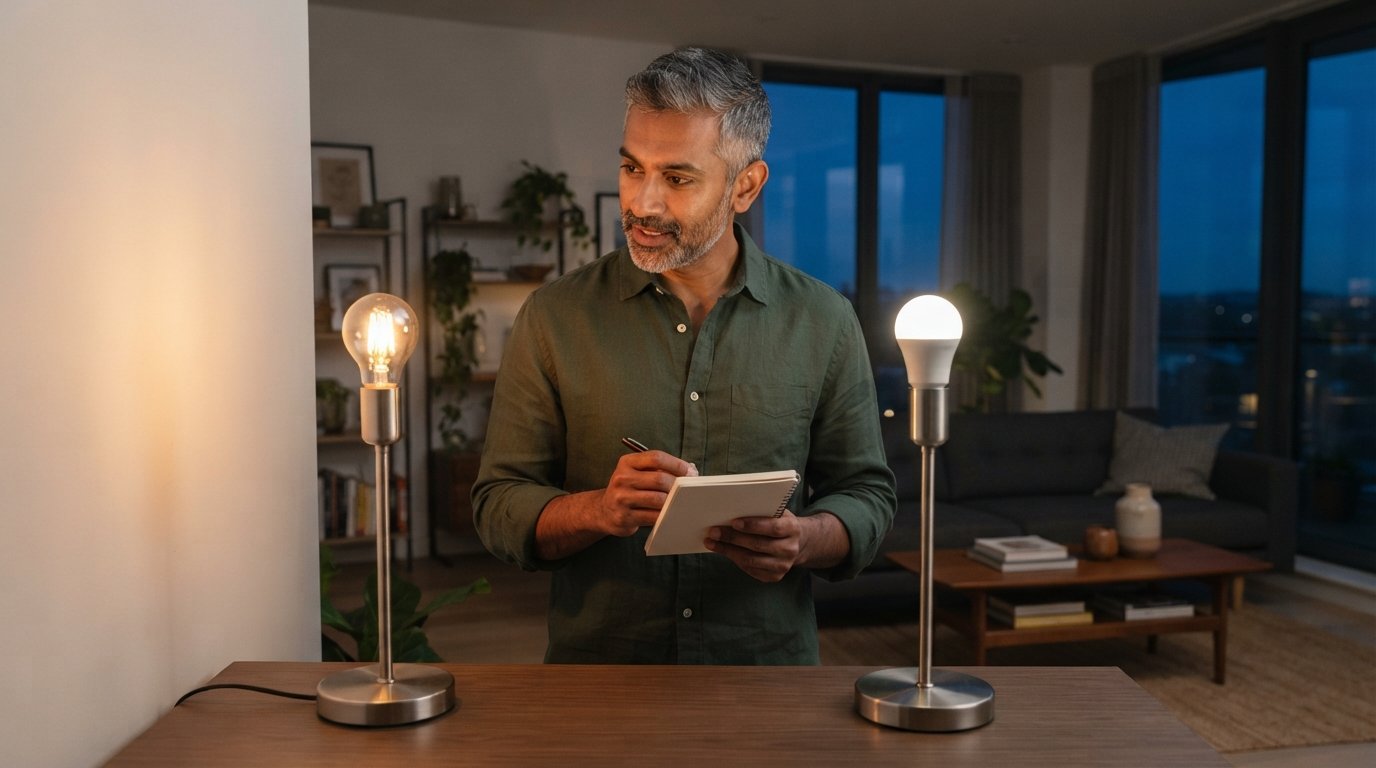
When comparing a tungsten bulb vs LED, the biggest differences are energy efficiency, lifespan, heat output, brightness, operating cost, and light quality. Tungsten bulbs, commonly known as incandescent bulbs, have been used for decades because they produce a warm and familiar light. LED bulbs, on the other hand, have become popular because they use much less electricity and generally last much longer.
If you’re deciding between a tungsten light bulb and LED bulb, understanding how each technology works can help you choose the right option for your home, office, workshop, or decorative fixture.
What Is a Tungsten Bulb?
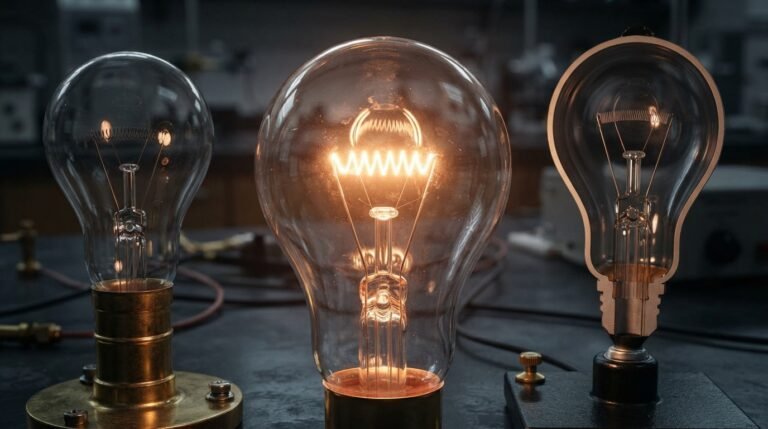
A tungsten bulb is a type of incandescent light bulb that produces light by heating a tungsten filament until it becomes extremely hot and glows.
Inside the bulb, an electrical current passes through the thin tungsten filament. The filament becomes hot enough to emit visible light.
Tungsten bulbs are known for their:
- Warm light
- Simple construction
- Excellent color rendering
- Instant illumination
- High heat output
- Relatively short lifespan
- Higher electricity consumption
Traditional incandescent bulbs are still used in some applications, particularly where their warm appearance and specific characteristics are desirable.
What Is an LED Bulb?
An LED bulb uses light-emitting diodes to produce light rather than heating a filament.
LED stands for Light Emitting Diode.
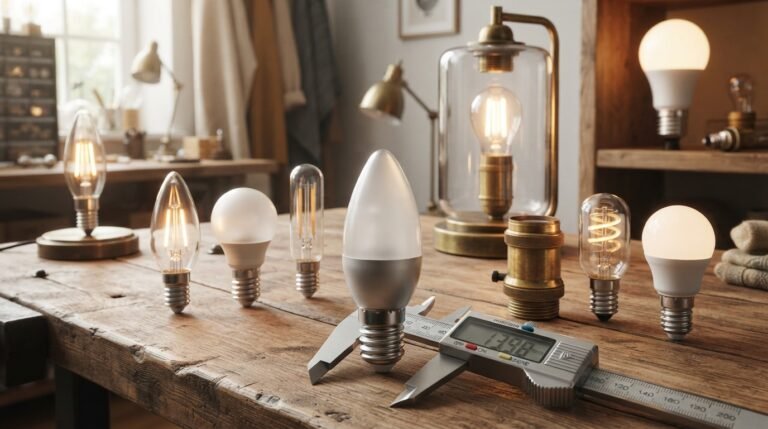
LED technology converts electrical energy into light much more efficiently than traditional incandescent technology. Modern LED bulbs are available in many shapes, sizes, brightness levels, and color temperatures.
Common LED bulb features include:
- Low energy consumption
- Long operating life
- Low heat output compared with incandescent bulbs
- Instant-on operation
- Multiple color temperatures
- Dimmable options
- Smart lighting compatibility
Tungsten Bulb vs LED: Quick Comparison
| Feature | Tungsten Bulb | LED Bulb |
|---|---|---|
| Technology | Heated filament | Light-emitting diode |
| Energy efficiency | Low | High |
| Lifespan | Relatively short | Long |
| Heat output | Very high | Much lower |
| Initial cost | Usually lower | Usually higher |
| Operating cost | Higher | Lower |
| Light color | Naturally warm | Available in many colors |
| Instant-on | Yes | Yes |
| Dimming | Generally simple | Requires compatible LED/dimmer |
| Durability | Filament is fragile | Generally more durable |
| Directional lighting | Limited | Easy to design |
Which Uses Less Electricity: Tungsten or LED?
LED bulbs use significantly less electricity than tungsten incandescent bulbs for a similar amount of light.
A traditional incandescent bulb may use around 60 watts to produce approximately the amount of light that a modern LED can produce using roughly 8–10 watts, depending on the specific products.
This difference can become substantial when a light operates for many hours every day.
For example, replacing several frequently used incandescent bulbs with LED bulbs can significantly reduce lighting electricity consumption.
Tungsten Bulb vs LED Brightness

Brightness is best compared using lumens, rather than watts.
Watts indicate how much electrical power a bulb consumes. Lumens indicate approximately how much visible light the bulb produces.
For example:
- A traditional 60W incandescent bulb produces roughly 800 lumens.
- An LED designed to replace a 60W incandescent may produce a similar amount of light while consuming substantially less electricity.
When shopping for LED replacements, look for the desired lumen output rather than simply choosing the same wattage number.
Tungsten Bulb vs LED Lifespan
Lifespan is one of the biggest differences between tungsten and LED technology.
A conventional incandescent bulb may have a rated life of around 1,000 hours, although actual lifespan varies by product and operating conditions.
Many household LED bulbs have rated lifespans of approximately 10,000 to 25,000 hours or more.
This means an LED can potentially operate for many times longer than a traditional tungsten incandescent bulb.
Why Do Tungsten Bulbs Burn Out?
The tungsten filament gradually evaporates as it operates at extremely high temperatures.
Over time, the filament becomes thinner and eventually breaks.
Vibration, frequent switching, and operating conditions can also affect incandescent bulb life.
Why Do LED Bulbs Last Longer?
LED bulbs do not rely on a thin filament that becomes white-hot.
Instead, they use semiconductor components to generate light. Because there is no traditional filament constantly heating to extreme temperatures, LEDs can achieve much longer rated operating lives.
However, LED bulbs are not indestructible. Heat, electrical conditions, driver components, and manufacturing quality can affect their lifespan.
Tungsten Bulb vs LED Heat Output
A major difference between the two technologies is heat.
Tungsten Bulb Heat
A tungsten incandescent bulb converts a large portion of its electrical energy into heat.
This is why an incandescent bulb can become extremely hot during operation.
Touching a recently used tungsten bulb can cause a burn.
LED Heat
LED bulbs are much more efficient, so they generally produce considerably less waste heat for the same amount of light.
However, LEDs still generate heat at their electronic components, which is why many LED bulbs have heat sinks or other thermal-management designs.
Are LED Bulbs Cooler Than Tungsten Bulbs?
Yes, generally.
An LED bulb usually produces much less heat than an equivalent incandescent bulb.
However, “cooler” does not mean completely cold. LED bulbs can still become warm, especially in enclosed fixtures or high-output designs.
Always follow the manufacturer’s instructions regarding enclosed fixtures and operating temperature.
Tungsten vs LED Color Temperature
One reason people continue to like tungsten lighting is its naturally warm appearance.
Traditional incandescent bulbs typically produce a warm light around 2700K, although the exact color temperature varies.
LED bulbs are available in a much wider range.
Common LED color temperatures include:
- 2200K–2700K: Very warm or warm white
- 3000K: Warm white
- 3500K–4000K: Neutral white
- 5000K–6500K: Daylight or cool white
This means you can choose an LED that closely resembles the appearance of traditional tungsten lighting.
Tungsten Bulb vs LED Color Rendering
Color rendering describes how accurately a light source makes objects appear compared with a reference light source.
Traditional incandescent and tungsten bulbs generally have excellent color rendering.
Many modern LEDs also offer very good color rendering, but performance varies by bulb.
If accurate color appearance is important, check the bulb’s CRI (Color Rendering Index) rating and consider high-CRI LED products.
Which Has Better Light Quality: Tungsten or LED?
The answer depends on what you mean by “light quality.”
Tungsten Advantages
Tungsten bulbs are valued for:
- Warm appearance
- Smooth spectral output
- Excellent color rendering
- Familiar incandescent appearance
- Attractive dimming behavior
LED Advantages
LED bulbs offer:
- Many color temperatures
- High-quality high-CRI options
- Adjustable white light in some products
- Smart color control in certain models
- Efficient illumination
For a traditional warm ambiance, tungsten remains appealing. For flexibility and efficiency, LED has a major advantage.
Tungsten Bulb vs LED Dimming
Traditional incandescent bulbs are generally straightforward to dim.
Their brightness changes smoothly as the electrical power supplied to the filament changes.
LED dimming can be more complicated.
A dimmable LED bulb must be compatible with the dimmer being used. An incompatible combination can cause:
- Flickering
- Buzzing
- Limited dimming range
- Unexpected shutoff
- Poor low-level performance
If you want to replace a dimmable tungsten bulb with LED, check both the LED bulb and dimmer compatibility.
Tungsten Bulb vs LED Cost
The purchase price is only one part of the total cost of lighting.
Tungsten Bulb
A tungsten bulb is usually inexpensive to purchase, but it consumes more electricity and needs to be replaced more frequently.
LED Bulb
An LED bulb may cost more initially, but its lower energy consumption and longer lifespan can reduce the total cost of ownership.
For lights that operate frequently, the energy savings can make LED particularly attractive.
Which Is Cheaper to Run?
LED bulbs are generally cheaper to operate.
The exact savings depend on:
- Bulb wattage
- Electricity price
- Number of bulbs
- Daily operating hours
- Bulb lifespan
- Purchase price
For example, replacing a 60W incandescent bulb with a roughly 9W LED can dramatically reduce electricity consumption while providing similar brightness.
Are Tungsten Bulbs Environmentally Friendly?
Traditional tungsten incandescent bulbs are generally less energy efficient than LEDs.
Because they consume more electricity for a similar amount of light, they can indirectly result in greater energy use over their operating life.
LED bulbs generally require less electricity to provide comparable illumination.
However, environmental impact also depends on manufacturing, transportation, lifespan, electricity generation, and disposal.
Are LED Bulbs Better for the Environment?
LEDs can reduce energy consumption because they produce more light per watt than traditional incandescent bulbs.
Their long lifespan also means fewer replacement bulbs are needed over time.
These factors can make LED lighting a more energy-efficient choice for many applications.
Tungsten Bulb vs LED for Home Lighting
For most everyday household lighting, LED is the more practical choice.
LEDs work well for:
- Bedrooms
- Kitchens
- Living rooms
- Hallways
- Bathrooms
- Offices
- Outdoor fixtures
- Ceiling lights
- Lamps
If you want the appearance of traditional tungsten lighting, choose a warm-white LED around 2700K.
Tungsten Bulb vs LED for Photography
The choice can be different for photography and video.
Tungsten lighting has historically been popular in studio and film applications because of its predictable warm color and continuous spectrum.
LED lighting has become increasingly common because it is:
- More energy efficient
- Easier to cool
- Available in adjustable color temperatures
- Available in high-output designs
- Easier to use for long periods
For professional photography or video, the best choice depends on the desired color, output, fixture design, and creative requirements.
Tungsten Bulb vs LED for Outdoor Lighting
LEDs are often a practical choice for outdoor lighting because of their efficiency and long operating life.
However, outdoor fixtures require bulbs designed for the environmental conditions involved.
Before installing an LED outdoors, check whether the bulb is rated for:
- Outdoor use
- Moisture exposure
- Enclosed fixtures, if applicable
- Expected temperature range
Do not assume that every LED bulb is suitable for outdoor use.
Can You Replace a Tungsten Bulb With an LED?
In many fixtures, yes.
Before replacing a tungsten bulb with an LED, check:
- Base type
- Bulb dimensions
- Voltage
- Lumens
- Color temperature
- Dimming compatibility
- Enclosure compatibility
- Fixture manufacturer’s requirements
For example, if your existing bulb has an E26 screw base, choose an LED with the same compatible base.
Are LED Bulbs Safe in Old Fixtures?
An LED can often be used in an older fixture if the bulb and fixture are compatible.
However, inspect the fixture for:
- Damaged wiring
- Loose sockets
- Heat damage
- Cracked insulation
- Corrosion
- Incorrect voltage
If an old fixture has damaged wiring or other electrical problems, replacing the bulb alone may not solve the safety issue.
Why Do Some People Still Prefer Tungsten Bulbs?
Despite their lower efficiency, tungsten bulbs continue to appeal to some users.
Reasons include:
- Warm, natural-looking light
- Excellent color rendering
- Smooth dimming
- Familiar appearance
- Low initial purchase price
- Decorative and vintage applications
Some people also prefer the visual character of incandescent lighting.
Advantages of Tungsten Bulbs
Tungsten bulbs have several advantages.
Warm Light
They naturally produce a warm, comfortable appearance.
Excellent Color Rendering
Traditional incandescent light renders colors very well.
Simple Dimming
They generally work smoothly with conventional dimmer systems.
Low Purchase Price
Individual bulbs are often inexpensive.
Instant Light
They reach full brightness immediately.
Disadvantages of Tungsten Bulbs
The major disadvantages include:
- High energy consumption
- Shorter lifespan
- Significant heat production
- Frequent replacement
- Lower efficiency
- Higher operating cost
For lights used many hours per day, these disadvantages can become particularly noticeable.
Advantages of LED Bulbs
LED technology offers several important benefits.
Energy Efficiency
LEDs use considerably less electricity for similar light output.
Long Lifespan
A quality LED can last many times longer than a conventional incandescent bulb.
Lower Heat Output
LEDs generally waste less energy as heat.
Multiple Color Options
LED bulbs are available in warm, neutral, and daylight color temperatures.
Smart Features
Some LED bulbs can connect to smart-home systems and offer remote control, scheduling, dimming, and color adjustment.
Disadvantages of LED Bulbs
LEDs also have some limitations:
- Higher initial purchase price
- Dimming compatibility can vary
- Electronic components can fail
- Heat management still matters
- Cheap products may have poor color quality
- Some LED bulbs are unsuitable for enclosed fixtures
Choosing a reputable product can help avoid many quality problems.
Tungsten Bulb vs LED: Which One Should You Choose?
For most general lighting applications, LED is the better overall choice because it combines energy efficiency, long lifespan, and flexible lighting options.
Choose tungsten when you specifically want:
- Traditional incandescent light
- Warm decorative lighting
- Simple dimming
- A classic vintage appearance
- Specific photographic or creative characteristics
Choose LED when you prioritize:
- Lower electricity consumption
- Long service life
- Lower operating costs
- Lower heat output
- Flexible color temperatures
- Modern lighting controls
Frequently Asked Questions
1. Is LED better than tungsten?
For most everyday lighting applications, LED is more energy efficient and lasts much longer than a traditional tungsten incandescent bulb.
2. Does tungsten use more electricity than LED?
Yes. A tungsten incandescent bulb generally consumes substantially more electricity than an LED producing a similar amount of light.
3. Which lasts longer, LED or tungsten?
LED bulbs generally have much longer rated lifespans than traditional tungsten incandescent bulbs.
4. Are tungsten bulbs brighter than LEDs?
Not necessarily. Brightness depends on lumens, not simply the bulb technology or wattage. An LED can provide similar or greater brightness while using much less electricity.
5. Do tungsten bulbs produce more heat?
Yes. Traditional tungsten incandescent bulbs convert a large portion of their electrical energy into heat.
6. Can I replace a tungsten bulb with LED?
Usually, provided the LED has the correct base, voltage, dimensions, brightness, and fixture compatibility.
7. Is tungsten light warmer than LED?
Traditional tungsten/incandescent bulbs naturally produce warm light, commonly around 2700K. However, LEDs are available in warm color temperatures that closely imitate incandescent lighting.
8. Which is cheaper to run, tungsten or LED?
LED is generally much cheaper to run because it requires significantly less electricity to produce comparable light.
9. Are tungsten bulbs still useful?
Yes. They can still be useful for decorative lighting, applications where their warm light and color rendering are desirable, and certain photography or creative applications.
Final Thoughts
The choice between tungsten bulb vs LED ultimately depends on your priorities. Tungsten bulbs offer a classic warm glow, excellent color rendering, and simple dimming, but they consume considerably more electricity and have shorter lifespans.
LED bulbs are generally the better choice for everyday lighting because they provide comparable brightness with much lower energy consumption and typically last much longer. If you want the traditional appearance of a tungsten bulb without the high energy use, a warm-white LED around 2700K can provide a similar visual atmosphere while delivering the efficiency and longevity benefits of modern LED technology.
About the Author