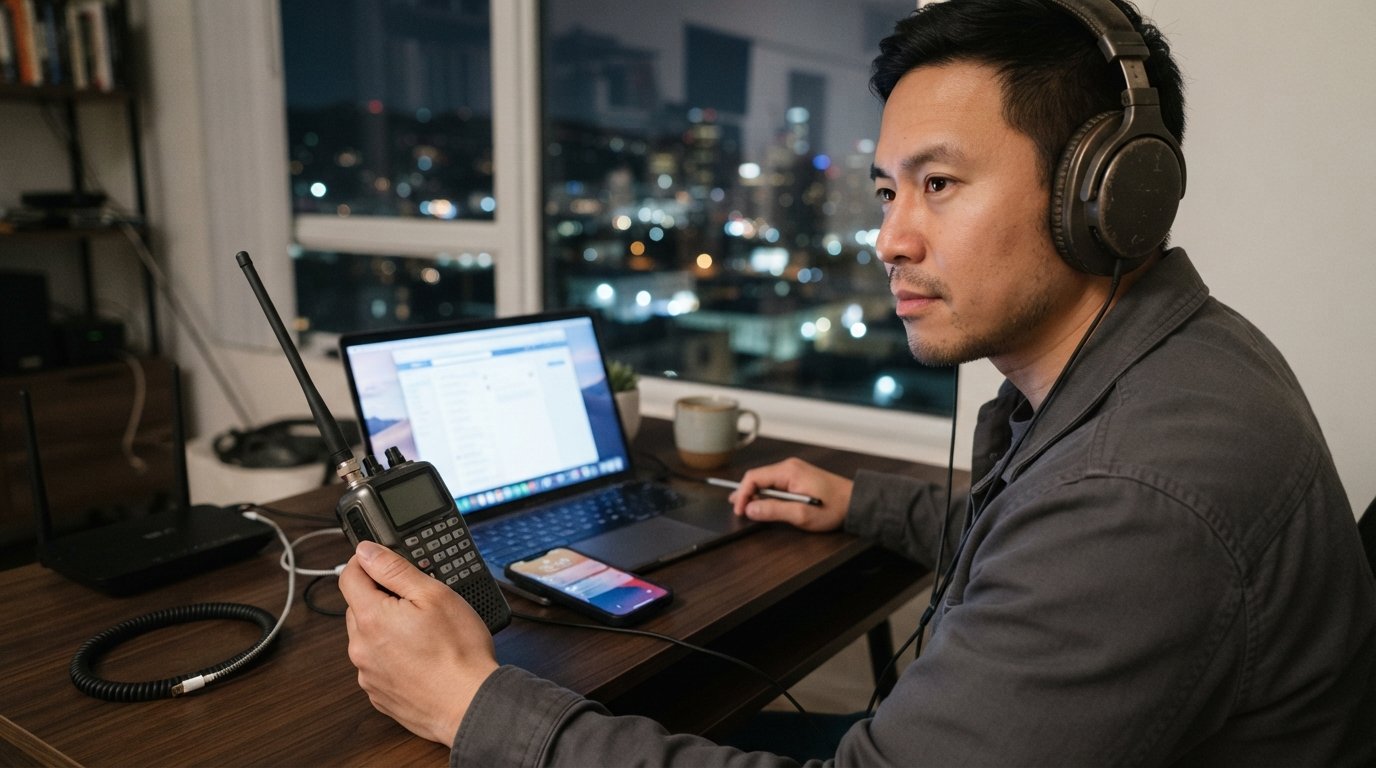
A LAPD scanner can help listeners follow publicly available radio communications associated with the Los Angeles Police Department (LAPD). Police scanners are commonly used by news organizations, researchers, hobbyists, neighborhood-watch participants, and people interested in understanding how public-safety communications work.
However, modern public-safety radio systems can be complex. Not every LAPD communication is necessarily available through a traditional scanner, and some communications may be encrypted or otherwise unavailable to ordinary listeners.
This guide explains what an LAPD police scanner is, how police scanner systems work, how to listen legally, and what to know about frequencies, scanner apps, online streams, and encrypted communications.
What Is an LAPD Scanner?
An LAPD scanner is a radio scanner or online service that allows users to monitor eligible public radio communications associated with the Los Angeles Police Department.
A traditional police scanner is a radio receiver capable of tuning into specific frequencies or trunked-radio systems.
Online scanner services work differently. They can receive radio traffic through a radio receiver connected to the internet and make selected public communications available through a website or application.
Common ways to listen include:
- Police scanner radios
- Scanner apps
- Online scanner websites
- Computer-based radio receivers
- Public safety streaming services
How Does an LAPD Police Scanner Work?
A traditional scanner searches or monitors programmed radio channels.
Depending on the radio system, the scanner may operate using:
- Conventional frequencies
- Trunked radio systems
- Digital radio
- Multiple talkgroups
Modern public-safety communications can therefore be much more complicated than simply entering one frequency into a scanner.
What Can You Hear on an LAPD Scanner?
Depending on the system and availability, listeners may hear communications related to public-safety activity such as:
- Dispatch communications
- Officer requests
- Traffic-related incidents
- Calls for service
- Unit status information
- Public safety coordination
The availability of specific communications can change because of system configuration, channel usage, technical limitations, or encryption.
LAPD Police Scanner Frequencies
People searching for LAPD scanner frequencies should understand that a modern radio system may use multiple frequencies and talkgroups rather than one universal police frequency.
A scanner may require:
- Frequency information
- System information
- Talkgroup information
- Correct modulation or digital mode
- Appropriate programming
Because radio systems can change, older frequency lists may become inaccurate.
For the most reliable information, use current documentation from reputable radio-monitoring resources and verify that you are complying with applicable laws.
What Is a Police Scanner Frequency?
A police scanner frequency is a radio frequency used for eligible public-safety communications.
Radio frequencies are measured in units such as:
- kHz
- MHz
- GHz
Many public-safety radio systems operate in the VHF, UHF, or other radio-frequency ranges.
The exact frequency does not by itself tell you whether a particular communication can be received. The radio system’s architecture and configuration also matter.
LAPD Scanner and Trunked Radio Systems
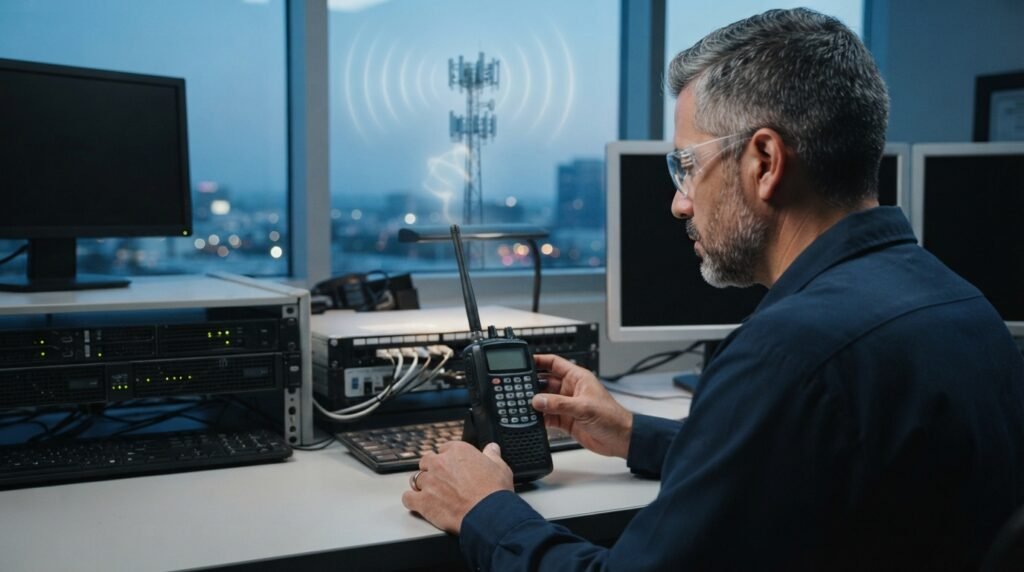
Many modern public-safety networks use trunked radio systems.
Instead of permanently assigning one frequency to each group, a trunked system dynamically assigns available radio channels.
A compatible scanner can follow the system’s control information and automatically move between frequencies as communications occur.
This is why simply programming a single frequency may not be sufficient for monitoring a trunked system.
What Is a Talkgroup?
A talkgroup is a logical communication group within a trunked radio system.
Different groups can use different talkgroups for different functions.
For a scanner listener, talkgroup information can be as important as frequency information.
A scanner programmed incorrectly may receive little or no useful traffic even when the radio system is active.
Digital Police Scanner Communications
Modern police communications frequently use digital radio technology.
Digital systems encode voice information into a digital signal instead of transmitting traditional analog audio.
Digital radio can provide:
- Efficient spectrum usage
- Improved audio features
- Flexible system management
- Advanced radio-network capabilities
A scanner must support the relevant digital technology to decode eligible unencrypted communications.
What Is an Encrypted Police Channel?
Some public-safety communications can be encrypted.
Encryption converts communications into a protected form that cannot be understood by ordinary scanner listeners without authorized access.
If an LAPD channel is encrypted, a conventional scanner cannot simply decode it by changing a setting.
There is also an important distinction between encrypted communications and communications that are merely difficult to receive because of coverage, system configuration, or technical limitations.
Why Can’t I Hear Everything on an LAPD Scanner?
There are several reasons.
1. Encryption
Encrypted communications are not available to ordinary scanner listeners.
2. Wrong System Programming
A scanner may not be programmed correctly for the relevant radio system.
3. Poor Reception
Buildings, terrain, distance, and antenna limitations can reduce reception.
4. Radio Traffic Changes
Agencies can change channels, talkgroups, or system configurations.
5. Scanner Limitations
Older scanners may not support newer digital technologies.
6. Internet Stream Limitations
Online scanner feeds depend on what the feed provider chooses and is technically able to provide.
LAPD Scanner Apps
A LAPD scanner app can be one of the easiest options for casual listeners.
Many scanner applications organize public radio streams by:
- City
- County
- Agency
- Radio category
- Emergency-service type
Advantages include:
- Easy setup
- No dedicated scanner hardware
- Smartphone compatibility
- Internet-based access
- Searchable public-safety feeds
However, app availability depends on the underlying scanner feed. An app cannot make unavailable or encrypted radio traffic accessible.
How to Listen to an LAPD Scanner Online
Online police scanner services can provide a convenient alternative to purchasing radio equipment.
The general process is:
- Choose a reputable scanner-streaming service.
- Search for Los Angeles or LAPD-related feeds.
- Select an available feed.
- Start the audio stream.
- Use headphones or speakers if desired.
The feed may include selected dispatch or other publicly available communications rather than every LAPD radio channel.
LAPD Scanner Online vs Physical Scanner
| Feature | Online Scanner | Physical Scanner |
|---|---|---|
| Equipment required | Smartphone/computer | Scanner radio |
| Internet required | Yes | Usually no |
| Setup | Generally easier | Can require programming |
| Reception | Depends on stream | Depends on location/antenna |
| Coverage | Feed-dependent | Local radio reception |
| Flexibility | Limited to available feeds | More control over programming |
For beginners, an online feed is often simpler. Radio hobbyists may prefer a dedicated scanner for greater control.
How to Program a Police Scanner
Programming depends on the scanner model.
You may need to enter:
- Radio system
- Frequencies
- Talkgroups
- Trunking information
- Digital mode
- Scan lists
Many modern scanners support computer programming, which can make configuration easier than entering every setting manually.
Always consult the scanner manufacturer’s documentation.
Best Antenna for a Police Scanner
A scanner’s antenna can significantly affect reception.
Possible antenna options include:
- Factory handheld antenna
- Magnetic-mount mobile antenna
- Base-station antenna
- Outdoor scanner antenna
The best choice depends on:
- Location
- Frequency range
- Indoor or outdoor use
- Height
- Nearby buildings
- Desired coverage
A higher-quality antenna does not guarantee perfect reception in every environment.
Can You Listen to LAPD Scanner on Your Phone?
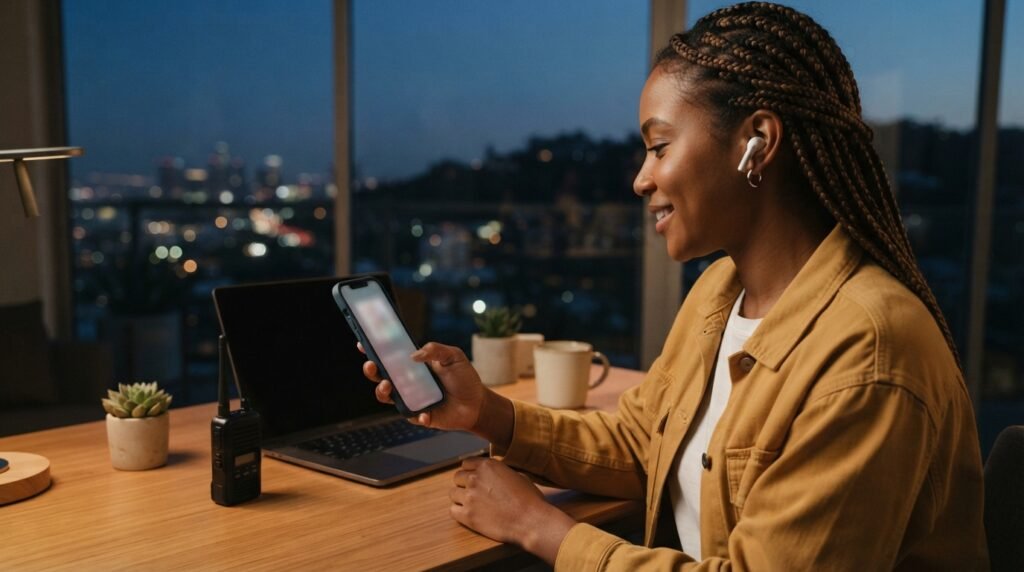
Yes, where a legitimate public stream is available.
A smartphone can access scanner audio through:
- Browser-based scanner services
- Police scanner apps
- Public safety streaming platforms
A phone-based solution is convenient because it doesn’t require specialized radio hardware.
Can You Listen to LAPD Scanner on a Computer?
Yes.
A computer can access online police scanner streams through compatible websites or software.
This can be useful for people who want to monitor a feed while working with other information on a larger screen.
Are LAPD Police Scanner Communications Public?
Some police radio communications may be publicly receivable, while others may be restricted, encrypted, or otherwise unavailable.
The fact that a radio signal can technically be received does not mean every use, recording, retransmission, or disclosure is legally permitted in every circumstance.
Always check applicable federal, state, and local laws.
Is It Legal to Listen to a Police Scanner?
In the United States, scanner-listening laws can vary depending on circumstances and jurisdiction.
Additional restrictions can apply to scanner use:
- In vehicles
- During criminal activity
- For certain restricted communications
- When recording or redistributing communications
If you plan to use a scanner in a vehicle or for anything beyond personal listening, check the laws that apply to your situation.
LAPD Scanner Codes and Abbreviations
Police radio communications can contain abbreviations and codes that may be unfamiliar to new listeners.
You may hear:
- Unit identifiers
- Location information
- Incident descriptions
- Status updates
- Radio codes
- Plain-language communications
Codes and terminology can vary over time and between agencies.
Avoid assuming that a code means the same thing everywhere.
Why Does My Police Scanner Have Static?
Static can result from:
- Weak signal
- Distance from the transmitter
- Antenna limitations
- Electrical interference
- Building materials
- Atmospheric conditions
- Incorrect scanner settings
Improving the antenna position or moving the scanner to a location with fewer obstructions may improve reception.
Why Does My LAPD Scanner Keep Stopping?
If the scanner repeatedly stops scanning, possible causes include:
- Active radio traffic
- Incorrect scan settings
- Priority-channel configuration
- Trunking configuration
- Weak or intermittent signals
- Scanner software settings
Check the scanner’s manual and programming configuration.
Can a Police Scanner Track Every LAPD Call?
No.
A scanner does not provide guaranteed access to every police communication.
Some communications may be:
- Encrypted
- On unavailable channels
- Outside the feed’s coverage
- Missed because of reception
- Restricted by system configuration
Online feeds can be even more limited because they depend on the specific receiver and feed configuration.
LAPD Scanner for News and Research
Police scanner information can be useful for journalists, researchers, and community observers.
However, scanner audio should not automatically be treated as verified information.
Radio traffic can be:
- Preliminary
- Incomplete
- Misheard
- Updated later
- Missing important context
For serious incidents, verify information through official sources and multiple reliable reports before treating scanner traffic as confirmed fact.
LAPD Scanner vs Official LAPD Information
A police scanner provides live or near-live radio communications when available.
Official police information may provide:
- Confirmed incident information
- Public statements
- Press releases
- Safety announcements
- Verified updates
For emergencies or important public-safety information, official communications should take priority over scanner chatter.
How to Get Better Scanner Reception
If you are using a physical scanner, try:
Use an Appropriate Antenna
Select an antenna designed for the frequency range you want to monitor.
Position the Antenna Higher
A higher position can sometimes improve line-of-sight reception.
Reduce Obstructions
Large buildings and dense structures can weaken radio signals.
Avoid Electrical Interference
Some electronic devices can create radio-frequency interference.
Verify Programming
Incorrect frequencies or trunking settings can prevent successful reception.
Frequently Asked Questions
1. What is an LAPD scanner?
An LAPD scanner is a radio scanner or online service used to listen to eligible publicly available LAPD-related radio communications.
2. Can I listen to LAPD scanner online?
Yes, where an online public scanner feed is available. The feed may contain only selected communications.
3. Is there an LAPD scanner app?
Several types of scanner apps can provide access to available public-safety radio streams. The available feeds depend on the service and its contributors.
4. What frequency is LAPD on?
LAPD communications can involve multiple frequencies, channels, and radio-system resources. There is not necessarily one frequency that carries all LAPD communications.
5. Why can’t I hear LAPD on my scanner?
Possible causes include incorrect programming, weak reception, incompatible scanner technology, unavailable feeds, or encrypted communications.
6. Can I listen to LAPD on my phone?
Yes. If a legitimate online feed is available, you can generally access it through a compatible scanner application or website.
7. Can police scanner apps hear encrypted channels?
No. A normal scanner app cannot make encrypted communications intelligible.
8. Does an LAPD scanner provide real-time information?
Depending on the feed, scanner audio can be close to real time, but delays may occur. Online streams can also have additional latency.
9. Can I use a police scanner while driving?
Laws concerning scanner use in vehicles vary by jurisdiction and circumstances. Check applicable local and state laws before using one while driving.
10. Is police scanner audio always accurate?
No. Scanner traffic can be incomplete, preliminary, or misunderstood. Important information should be verified through official sources.
Final Thoughts
An LAPD scanner can provide an interesting way to monitor eligible public-safety radio communications, whether through a dedicated scanner, computer, or smartphone app. However, modern police radio systems are more sophisticated than traditional analog scanners, with digital technology, trunked systems, multiple talkgroups, and in some cases encrypted communications.
If you are new to police scanning, an LAPD scanner online feed or mobile app is usually the easiest place to start. For more advanced listening, a compatible digital scanner and properly configured antenna can provide greater flexibility. Remember that scanner traffic is not a substitute for official emergency information. Communications can be incomplete or delayed, and some channels may not be publicly accessible. Always use scanner information responsibly and follow the laws that apply to your location and circumstances.
Related Post
- Martin County Fire Scanner – Complete Guide to Listening to Local Fire & Rescue Communications!
- Martin County Scanner – Complete Guide to Local Scanner Information!
- Pic Of Mri Scanner – What Does an MRI Scanner Look Like?
About the Author